



Receiving Accuracy, Not Budget, Is What Stalls Warehouse AI
Industrial
October 16, 2026

The 2027 Third-Party Logistics Study was released on October 6. Shippers report using AI for predictive analytics and risk planning at 66 percent. Third-party logistics providers sit at 43 percent. The useful part is the list of what holds the slower half back: data quality and availability at 61 percent, legacy system integration at 54 percent, budget at 46 percent. Money ranked last.
Receiving accuracy and pick accuracy are not line items you can add to an AI budget. They are the input a budget cannot buy.
If you stock fasteners, fittings or electrical hardware, data quality is not an IT abstraction. It is the number next to a bin of 10-32 hex nuts.
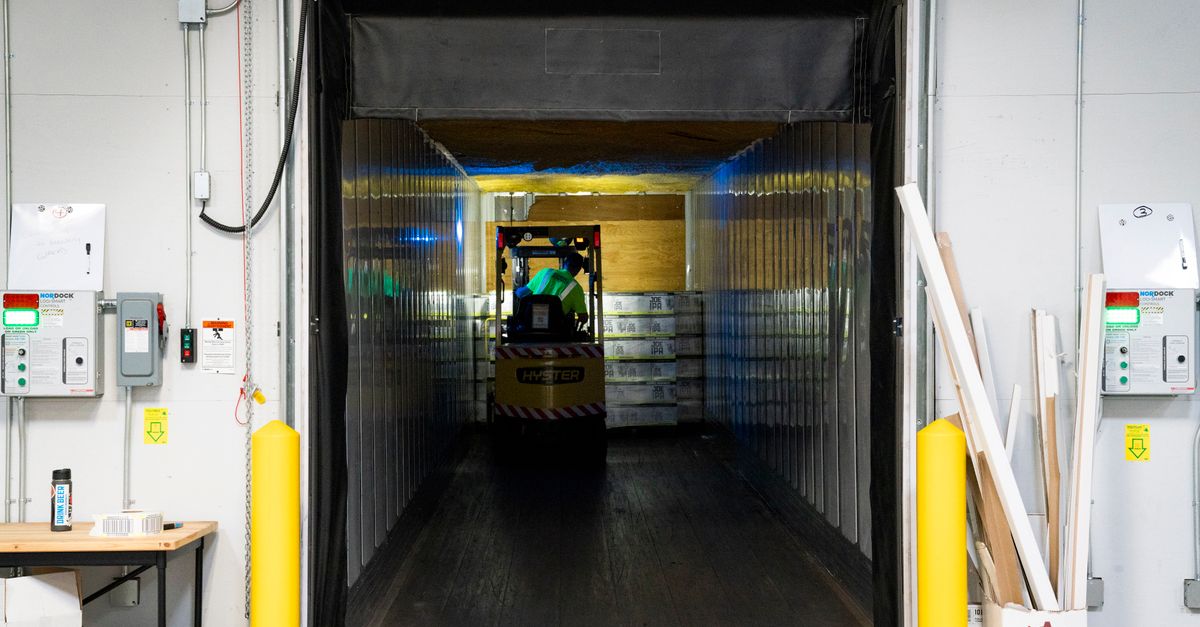
Think about how that number gets made. A picker counts out 500 washers by hand into a tote, and the system deducts 500 because 500 is what the order asked for. Nothing measured what left the shelf. Count 515 and you over-shipped free product. Count 485 and you under-shipped into a shortage claim, return freight, and a buyer who remembers it at the next quote.
Your ERP is not lying to you. Acumatica reports what should be on the shelf based on transactions. What is on the shelf is a different question. The space between those two answers is where year-end variance comes from, and it is the same space a forecasting model inherits the moment you point one at your history.
So read that 61 percent as an operations finding, not a software finding. Coverage of the study frames AI as already embedded in planning and execution. The model is available. Clean counts are the part nobody sells you.
Weigh ten bins. Choose the ten SKUs with the most lookalike neighbors, same thread pattern, a size or two apart. Weigh the full bin, divide by the known unit weight, and compare to the system quantity. Write both numbers down. This is the exact check Cloudbox runs on every container: set the bin on the Cloudbox scale station and the measured count appears next to the system number, no calculator and no tally sheet.
Split the variance by direction. Overcounts and undercounts are different problems. Overcounts are margin walking off the dock as over-shipped product, invisible because nobody complains about extra bolts. Undercounts turn into under-shipped orders, chargebacks and reship freight. One number hides both.
Check one inbound skid. Weigh a received line against the packing slip before it reaches a bin location. Receiving is where a wrong quantity gets adopted as truth, and every pick inherits it. With Cloudbox the same scale station that counts at the bin counts at the dock, so the received quantity is measured before it ever becomes the system number.

Cloudbox is scale-based inventory automation built on smart container technology. Set the container on the Cloudbox scale station, the station weighs it, and the count updates. No tally sheet, no transcription. One station rolls through the inventory room and covers a whole rack of SKUs.
For the person picking, the order line stops being a memory test. Units go onto the station and the count climbs to the target, so they stop on the exact number instead of near it. Heavy-gauge hardware runs on floor-capacity scales from makers like Rice Lake; light parts run on bench configurations.
What changes is what you can report. Order accuracy measured instead of assumed. Shortage claims traceable to a line. Per-location quantities that tell a multi-site operation to transfer stock rather than raise another PO. See how this runs in industrial distribution, or read the integration options for your ERP.
The next AI pitch will promise forecasting on your history. Give it counts worth forecasting.
Receiving accuracy is how closely the quantity you record at the dock matches what physically arrived, measured per line. Every later transaction is calculated from that number, so an error at receiving spreads into picking, counts and reorder points. Weigh a received line against the packing slip and you catch it while the supplier is still accountable.
Forecasting and replenishment models calculate from your recorded on-hand history. If those records come from hand counts and assumed deductions, the model learns your counting errors along with your demand. The 2027 Third-Party Logistics Study found data quality and availability was the top barrier to wider AI adoption at 61 percent, ahead of legacy integration and budget.
Yes, and cross-location visibility is usually the fastest payoff. When each site reports measured quantities in real time, replenishment stops being a guess against a company-wide total. A site holding dead stock becomes visible to a site that is short, so the answer is a transfer.
By weight. Every fastener, washer or fitting has a stable unit weight, so a known total weight converts to a known quantity. Set the container on a scale station and the count comes from the measurement, not from a person tallying into a tote. It gets more reliable as parts get smaller and more alike, which is where visual checks fail.
Rather than chase a benchmark, measure your own two directions separately. Weigh a sample of lookalike SKUs, compare to the system quantity, and record overages and shortages as separate totals. Overages show margin leaving through overfulfillment. Shortages show future chargebacks. A blended accuracy percentage hides both.