


Warehouse Inventory Accuracy Software: How Four Approaches Actually Stack Up
Industrial
May 29, 2026

Here's the short answer. The best warehouse inventory accuracy software for you depends on three things: what you stock, how it moves, and where your accuracy is actually breaking. A tier-one WMS wins for large operators with labor management and slotting needs. Barcode-first platforms win for high-SKU distributors with consistent packaging. RFID wins when you need line-of-sight-free reads at speed. And weight-based systems win when your accuracy problem is really a counting problem on bulk, repetitive, or high-value items.
Most distributors don't actually know which category they fall into. So they buy the platform their peers bought, spend nine months implementing it, and end up with a 94% accuracy rate and a seven-figure invoice. This is a comparison of four approaches to industrial inventory accuracy, written by someone who's deployed them. It's honest about where Cloudbox fits and, more usefully, where it doesn't.
Quick decision tree before the detail.
| Dimension | Tier-one WMS | ERP-native WMS | RFID-first | Cloudbox (weight-based) |
|---|---|---|---|---|
| Typical accuracy ceiling | 99.5%+ | 97% to 99% | 99%+ on tagged items | 99.5%+ on weighed items |
| Implementation window | 6 to 18 months | 2 to 6 months | 3 to 9 months | 4 to 12 weeks |
| Total first-year cost (mid-market) | $500K to $2M+ | $75K to $300K | $150K to $600K | $30K to $120K |
| Hardware | Scanners, voice, RF, label printers | Zebra Android scanners, label printers | RFID readers, antennas, tags | Floor scales, bench scales, Zebra Android scanners |
| Cycle counting load | Reduced with directed counts | Manual, driven by schedule | Low on tagged SKUs | Reduced 60% to 80% on weighed SKUs |
| Best fit SKU count | 50K+ | 1K to 25K | Varies by tag economics | Any, strongest on bulk and repeat parts |
| ERP integration | Deep, bidirectional | Native | Middleware required | Native NetSuite, Acumatica, and REST API |
Tier-one WMS platforms earn their price tag. Manhattan Active, Blue Yonder, and Korber all deliver complete warehouse orchestration: wave planning, task interleaving, labor management, slotting optimization, yard management. If you have 100+ warehouse employees and your operation outgrew its ERP's native module two years ago, you need this category.
Where they fall short: implementation timelines are real. Six months is optimistic. Eighteen months for a complex multi-site rollout is not unusual. The internal change management burden is heavy. And they assume a level of standardization in your SKU and packaging mix that bulk-heavy distributors often don't have.
NetSuite WMS and Acumatica WMS are solid for operators who are already in those ERPs and have reasonably well-packaged inventory. The integration is tight by design. Barcode scanning works. Basic cycle counting is built in. You're not paying a separate vendor for the WMS layer.
The limitation is flexibility. Generic barcode workflows don't handle bulk counting well. A bolt bin with 500 mixed sizes doesn't scan. A barrel of liquid doesn't scan. Anything sold by weight rather than count requires a workaround or a custom build, neither of which are trivial in an ERP-native module.
RFID shines in apparel, electronics, and returnable asset tracking where tag cost per unit is justified by volume and velocity. Reading 1,000 tagged items in a pass is genuinely impressive. The inventory audit that used to take four hours takes twenty minutes.
The ceiling is tag economics. At $0.10 to $0.25 per passive tag, a 50,000-SKU parts distributor is looking at $5,000 to $12,500 in tags per cycle, before labor and reader infrastructure. For high-velocity apparel or high-value electronics, that math works. For industrial consumables with thin margins, it often doesn't.
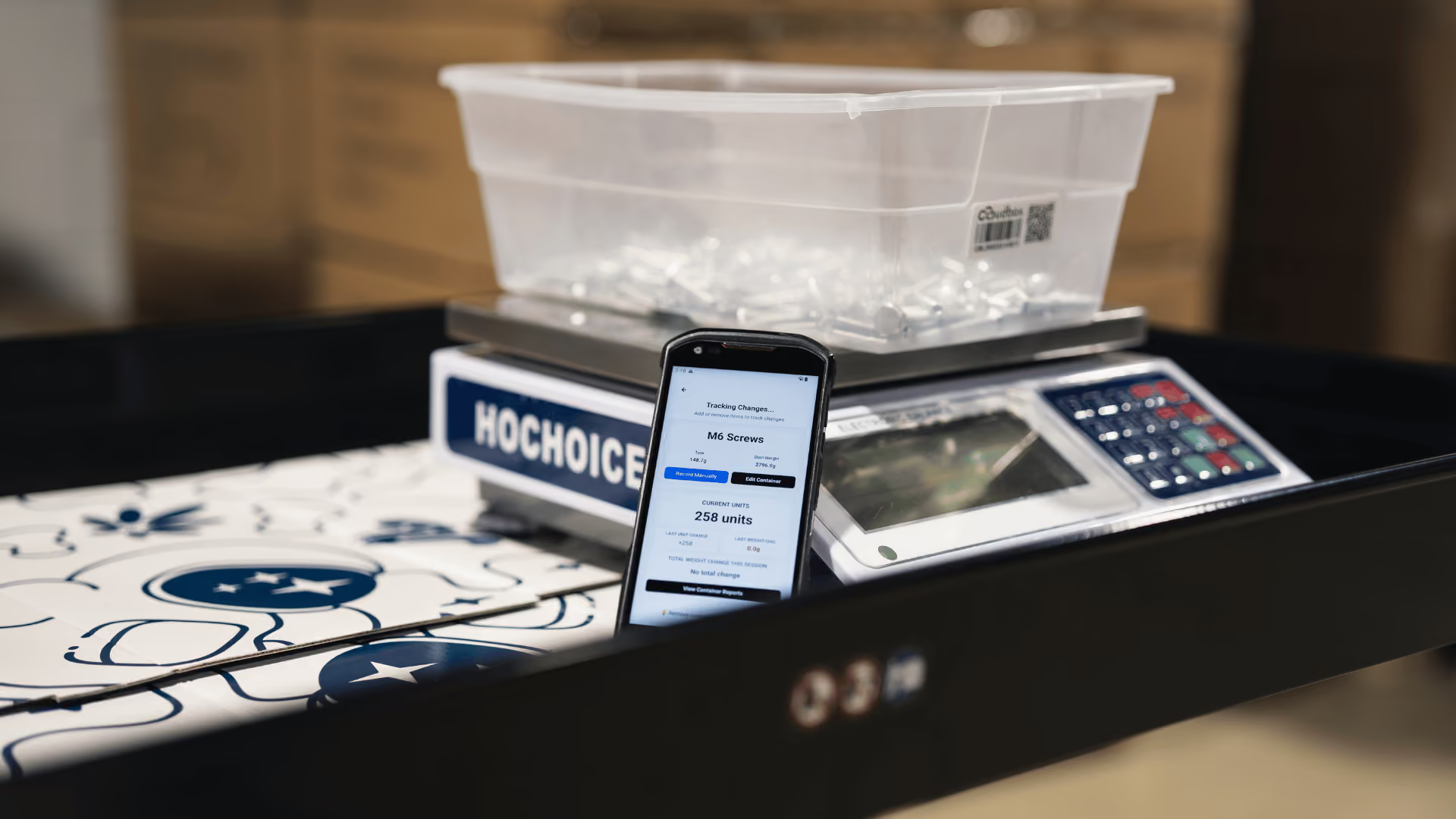
Cloudbox adds a weight-based accuracy layer to whatever system you already run. A scale under a parts bin pushes the current count to your ERP in real time. No scan required. No count required. The bin knows how many parts are in it because it weighs them.
BACO Enterprises, an industrial distributor running a Savant WMS, deployed Cloudbox on their 400 highest-velocity bulk SKUs. In the first year, they eliminated 40,000 overfulfillment events that had been generating chargebacks from customers. They kept their existing WMS and Zebra Android scanners for everything else. Cloudbox covered the piece the scanner couldn't.
Where Cloudbox doesn't fit: if you need full labor management, task interleaving, or slotting optimization, look at a tier-one WMS. Cloudbox is an accuracy layer, not a warehouse orchestration platform. It doesn't route pickers or manage dock appointments. If you need those features, they need to come from somewhere else.
See the BACO case study and the hardware lineup if you want the specifics on what a weight-based deployment actually looks like.
If you're evaluating warehouse inventory accuracy software and you run bulk components, granular consumables, or repetitive high-value parts, the weight-based layer should be in your evaluation. It's not a replacement for a WMS. It's the piece most WMS platforms don't cover well.
If your accuracy problem is primarily in packaged goods with reliable barcodes, an ERP-native module or a mid-market WMS is probably the right answer. If you're at enterprise scale with complex labor management needs, go tier-one.
The mistake most operators make is assuming the answer is always more software. Sometimes the answer is a scale under the bin. Talk to the team about where your accuracy is actually breaking before you sign anything.
98% to 99.5% at the SKU level is realistic. Best-in-class operations hit 99.8%+ on fast movers and slightly lower on slow-moving or bulk items. If you're below 95%, your margin is probably leaking faster than you think.
Yes, but far fewer. Scales catch drift in real time on the items they cover. You still cycle count non-weighed SKUs and validate scale calibration on a schedule. Most Cloudbox customers cut cycle count hours by 60% to 80% without losing accuracy.
A single industrial scale station runs $800 to $3,500 in hardware. Cloudbox is SaaS on top. A full tier-one WMS rollout at a mid-market distributor routinely lands in six to seven figures with implementation fees. The gap is real, and it's why weight-first makes sense for operators who don't need full labor management or slotting optimization.
Partially. Single-SKU bins and bulk components are ideal. Mixed totes need a hybrid approach: scan the tote, weigh the contents, let the software reconcile expected weight against actuals. It flags discrepancies instead of trusting the scan blindly.
Four to twelve weeks for a single site, depending on scale count and ERP integration depth. NetSuite and Acumatica both have documented APIs, so the ERP side is usually the faster piece. The longer pole is physical scale placement and staff training.

.png)