



3PL Fulfillment Chargebacks Start at the Pick Face, Not the Dock Door
Industrial
June 20, 2026
The chargeback shows up about 30 days after the shipment. A PDF from the customer's accounts payable team. A dollar figure. A reference to an order number you probably don't remember.
Your ops team pulls the shipping records. The weights check out. The manifests are signed. You have documentation for everything that happened after the order left your dock. And you still owe the money.
Because the problem didn't start at the dock.
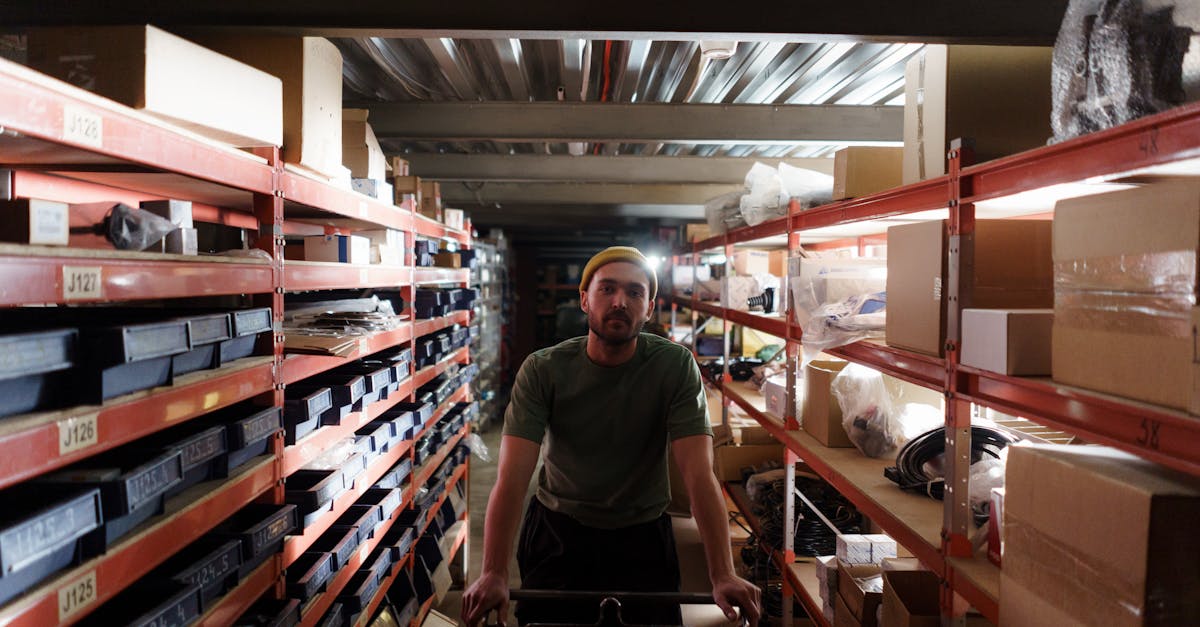
The assumption in most 3PL operations is that chargebacks come from shipping errors: wrong carrier, late pickup, damaged goods in transit. Those generate chargebacks too. But the most expensive category in most 3PL operations is short-ship and over-ship, and those originate at the pick face, not the loading dock.
A picker grabs the wrong quantity. Or grabs the right quantity and puts it in the wrong carton. Or grabs the right quantity, right carton, but skips the verification step because the verification step takes 40 seconds per order and the pick rate goal requires them to move faster than that.
By the time the order is packed, labeled, and manifested, the error is invisible. The packing slip says the right quantities. The label is correct. The weight check at the dock is for gross weight, not per-SKU verification. The error ships.
Thirty days later, the customer's receiving team finds it. Or doesn't find it at the receiving dock but discovers it later during a cycle count. Either way, you get the chargeback.
A single short-ship on a 50-unit order is a small absolute number. Most 3PLs have per-order error rates they report to customers as their accuracy metric. The error rate looks good. The economics don't.
Chargebacks carry administrative overhead on both sides. The customer files a claim, you respond, someone reconciles it, and a credit gets issued. The labor cost of processing one chargeback is often larger than the value of the short-shipped product itself.
High-velocity customers with tight SLAs often escalate beyond chargebacks. A third short-ship in a quarter triggers a corrective action request, a vendor compliance audit, or a shift to a competing 3PL. The chargeback is a symptom. The lost contract is the cost.
Pick-face verification means confirming the correct quantity at the moment of pick, before the item hits the order container.
Scan-based verification does this for identity: it confirms you picked the right SKU. It doesn't confirm quantity. A picker can scan a barcode and put three units in the carton when the order calls for four. The scan passes. The order is still wrong.
Weight-based verification confirms quantity. When a picker places items on a Cloudbox Mobile Scale Station, the station checks the weight of what's been picked against the expected weight for the ordered quantity. If the weight is wrong, the system flags it before the picker moves on.
This is the step most 3PLs don't take because it slows the pick. Historically, that was true. A manual verification step adds time to every pick. But a weight-based verification step that's integrated into the cart workflow doesn't require the picker to stop and do anything different. The scale is under the container they're picking into. The verification happens as they work.
The error surfaces earlier. Instead of discovering a short-ship at the customer's receiving dock 30 days later, you catch it at the Cloudbox Mobile Scale Station on the pick floor, in the same motion as the pick.
The picker sees a flag. They recount the items in the container. They correct the quantity before the order is packed. The error never ships.
The chargeback doesn't happen. The documentation burden doesn't happen. The customer never knows there was a problem because there wasn't one by the time the order left your facility.
For operations running a Zebra scanner workflow, the Cloudbox Mobile Scale Station integrates with the same scanning workflow. The scale sits on the fulfillment cart. The Zebra scanner triggers the weight check after each pick. The picker's workflow doesn't change. The verification layer runs underneath it.
Weight-based pick verification catches quantity errors. It doesn't catch wrong-SKU errors if the wrong SKU has the same weight as the right one. That's a real edge case in operations with commodity SKUs of similar dimensions and mass.
Weight-based pick verification catches quantity errors for weight-consistent SKUs. It does not catch wrong-SKU errors when two SKUs share the same unit weight. That is an edge case for commodity operations where multiple SKUs have similar mass. Combine weight verification with barcode scanning for identity and you cover both failure modes. For operations using Acumatica ERP, Cloudbox syncs quantity data through the API so your order records stay current without a separate reconciliation step.
And it won't fix a 3PL whose core issue is staffing, training, or storage layout. Pick-face verification makes a functioning pick workflow more accurate. It can't compensate for a fundamentally broken one.
If you traced your last ten chargebacks to their origin point in your pick workflow, how many would you find started before the order hit the pack station?
Most 3PL operators who run this analysis are surprised. The dock is clean. The manifest process is clean. The short-ships start one step earlier, every time.
That's the step to fix. Learn more about how the Cloudbox Mobile Scale Station works for 3PL fulfillment at cloudboxapp.com/industrial, see deployment examples at cloudboxapp.com/case-study, or talk to our team at cloudboxapp.com/contact-us.
A chargeback is a financial penalty issued by a customer or retailer when a 3PL ships an incorrect order: wrong quantity, wrong SKU, or damaged product. Short-ship chargebacks (fewer units than ordered) and over-ship chargebacks (more units than ordered) are both common. The chargeback typically arrives 30 to 60 days after the shipment.
The pick face is where a human selects items from storage. Scan-based verification confirms SKU identity but not quantity. A picker can scan a barcode and place three units when the order calls for four. The scan passes. The error enters the order. Dock-level weight checks verify gross shipment weight, not per-SKU quantity. The error ships.
Weight-based verification works best for SKUs with a consistent known weight per unit. It is most effective for commodity items, industrial parts, fasteners, and similar products. It does not reliably catch wrong-SKU errors when two SKUs have identical weights. For maximum coverage, combine weight-based quantity verification with barcode scanning for SKU identity.
Pick-face verification confirms the correct quantity at the moment of pick, before the item enters the order container. Weight-based pick-face verification uses a scale on the fulfillment cart. When the picker places items, the scale reads the weight and compares it to the expected weight for the ordered quantity. A discrepancy flags before the picker moves to the next location.
The Cloudbox Mobile Scale Station is a scale mounted on a fulfillment cart. It integrates with Zebra scanner workflows and the Cloudbox app. After each pick, the scale reads the container weight and confirms it matches the expected weight for the order quantity. If it does not match, the picker's scanner or tablet shows a flag and the picker recounts before moving on.

.png)