

How Manufacturing Lines Run Out of Parts Even When Forecasting Looks Correct
Industrial
January 28, 2026
.avif)
Production lines rely on precision. Schedules, labor, raw materials, and finished goods all depend on predictable flow. Forecasting tools are designed to support that flow. They use historical patterns, order volumes, and lead times to determine when and how much material needs to arrive. So when a line runs out of parts, it feels like a direct contradiction. The forecast said everything was accounted for. The system showed full availability.
Yet the team on the floor cannot find the components they need.
This problem is far more common than most facilities admit. It does not happen because forecasting tools are broken. It happens because the assumptions behind forecasting do not match the way inventory actually moves inside a plant.
Forecasting tools assume that once materials arrive, they move through the plant in a straight, predictable path. They assume accuracy at receiving, accuracy during replenishment, accurate bill of materials data, and accurate location tracking. In most plants, these assumptions fall apart.
Here are the most common reasons lines run short even when the system shows full stock.
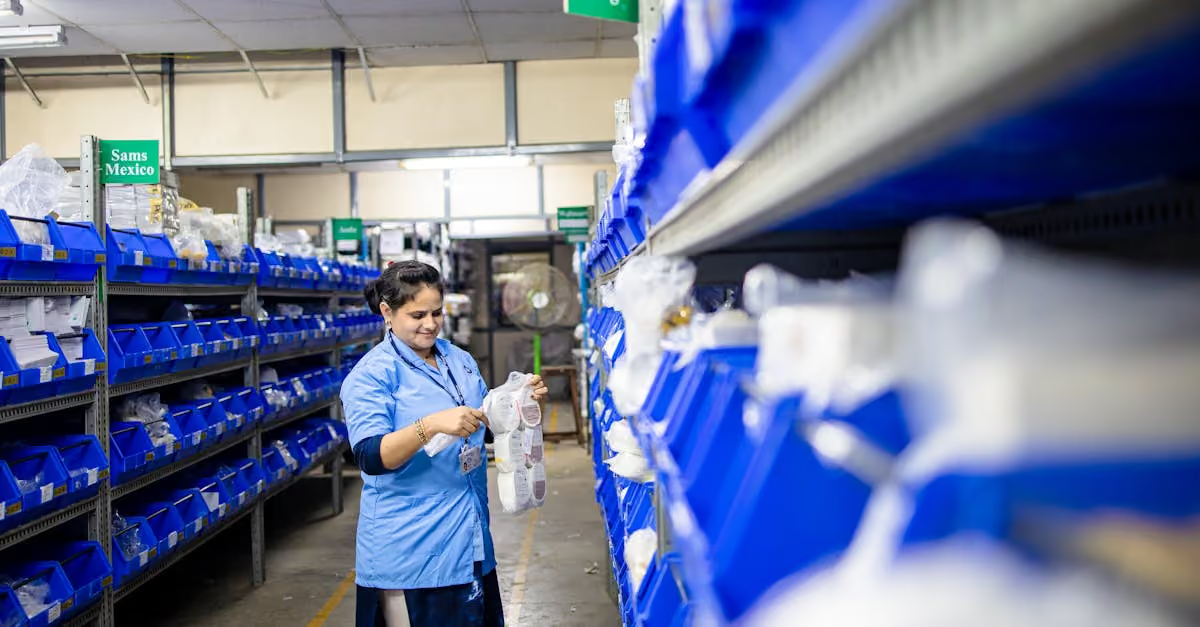
A pallet might be delivered to the wrong station. A bin might be placed on the wrong shelf. A handful of parts might be pulled early for another job and never recorded. The system counts availability. The line needs proximity. Forecasting cannot fix physical misplacement.
Inventory accuracy erodes slowly. A few parts go missing during one shift. A bin gets counted incorrectly. A technician moves items for convenience. None of these issues cause immediate failure, but together they distort the numbers the forecasting model depends on.
Forecasting expects stable inputs. Manufacturing often provides unstable ones.
Many BOMs stay static for years even though production teams evolve their process. Teams may use an extra washer, reinforce a component, or substitute a part during assembly. These changes improve the build but undermine the accuracy of every future forecast.
The line follows the real requirement. The system follows the documented one.
When parts move with the product rather than staying in a fixed bin, the system often loses visibility. If a pallet is staged between stations, or if teams preassemble components ahead of schedule, the system can show availability even when the physical supply has already moved on.
Forecasting can predict demand, but it cannot correct gaps in visibility.
A replenishment cycle might happen once per shift while production demands material every hour. When schedules do not align, the line experiences shortages even when the building has plenty of stock.
A mismatch between counting and consumption creates artificial scarcity.
When the line runs out of parts, the consequences reach far beyond a short delay.
A plant does not need a major breakdown to experience real downtime. It only needs a single part to be unavailable at the wrong moment.
The solution is not more forecasting. The solution is better alignment between planning systems and real plant behaviors.
Knowing a part is in the building is not enough. Teams need to know exactly where it is stored and how quickly it can reach the line.
Small mistakes at the beginning of the workflow create major disruptions later. Accurate sorting, clear labeling, and consistent put away practices protect the integrity of the entire system.
Production evolves constantly. Documentation must evolve with it. When BOMs match reality, forecasting becomes more reliable.
Work in process often hides the most significant drift. When WIP is visible, forecasting becomes far more accurate.
Quick spot checks prevent drift from accumulating and give teams early warnings before the line feels the impact.
Production lines do not run out of parts because forecasting is inaccurate. They run out of parts because the assumptions behind forecasting are too clean for the reality of plant operations. When teams align data with real workflows, schedules become more predictable, and production moves with far fewer interruptions.
Forecasting works best when the inventory behind it is grounded in reality.

.png)